
Ayans Lam Miguez
Film: In the Midst of Art and Devotion

Ayans Lam Míguez is a filmmaker from Guatemala whose path in cinema began with a small short film created as his high-school graduation project. That early experience revealed not only his interest in audiovisual production, but also his fascination with the entire creative process behind a film.
His directing style is rooted in the belief that a production is never just visual—it’s emotional. Ayans focuses on crafting stories that allow audiences to feel as if they are inside the moment, inhabiting the same emotional space he experienced while writing or standing on location. His work aims to immerse viewers, inviting them to perceive the world as he does through cinema.
Among his most significant projects are Entre el arte y la devoción, a documentary exploring cultural and spiritual expression, as well as various commercial pieces created for houses and hotels. He has also received recognition at the university level, including an award for Best Experimental Project for a two-minute film about a young boy questioning whether growing up is really as wonderful as adults claim.
Currently, Ayans is producing advertising content and short films for his university. A distinctive aspect of his creative identity is that he sees himself as an editor first and a director second. Because of this, he constantly envisions the final cut before production even begins—shaping his decisions on set with the end result already in mind.
Simon Wharf
Film: Unconditional
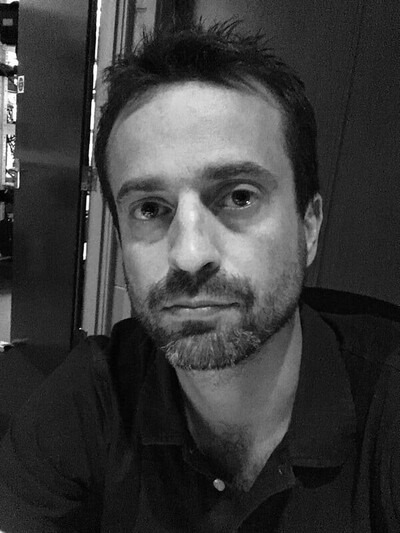
Simon is an award-winning filmmaker from Dagenham, East London. In 2013 he won a Royal Television Society Award with his short film, ‘Pussy Cat’.
Now employed as a filmmaker at the University of Bath, Simon has subsequently won awards for documentaries on cocoa farmers in Ghana, diamond miners in Sierra Leone, and cobalt miners in the DRC.
Rita de Cácia Oenning Da Silva, Kurt Shaw
Film: The Other Side of the Other
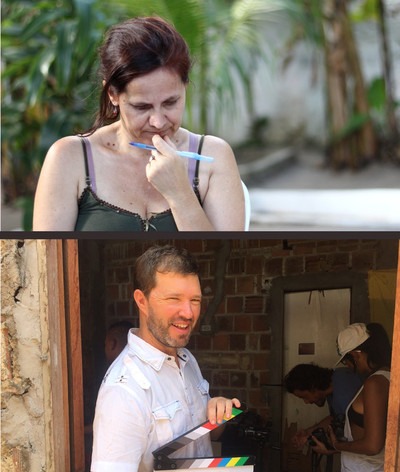
Rita de Cácia Oenning da Silva was born in a peasant family that had lost its land in the south of Brazil, but she went to university on scholarship and then worked as a professional actress for many years; she rebelled against what everyone around her knew to be impossible for an impoverished girl. Later, working with Kurt Shaw — whose anger at the limited possibilities of a Harvard doctorate took him to the favelas of Brazil and Colombia — she developed methods to use theater and film to teach other marginalized children to disobey the impossible.
Working with children in Brazil, Mexico, Colombia, Paraguay, and Bolivia, they produced the world’s first feature fictional film made by ex-child soldiers, a telenovela by indigenous children that showed on Bolivian national TV, and an award winning hip-hop album where children from the favelas protest gang and police violence. Their work became the basis for a successful and groundbreaking new children’s policy of the Paraguayan government.
In addition to their artistic work, da Silva and Shaw have produced a dozen academic books, several children’s stories, and two novels about marginalized children. Together, they have won the United Nations/BMW Intercultural Innovation Award (2016), the UN Online Volunteering award (4 times), a Wenner Gren Fellowship (2007), the Harvard First Decade Award (2007), The Freedom to Create Youth Prize (2008, finalist 2011), and have been named to the GOOD 100, among others.
They live in Florianópolis, in the south of Brazil, with their seven year old daughter, Helena.
Kurt Shaw, Rita Oenning da Silva
Film: Dabucuri
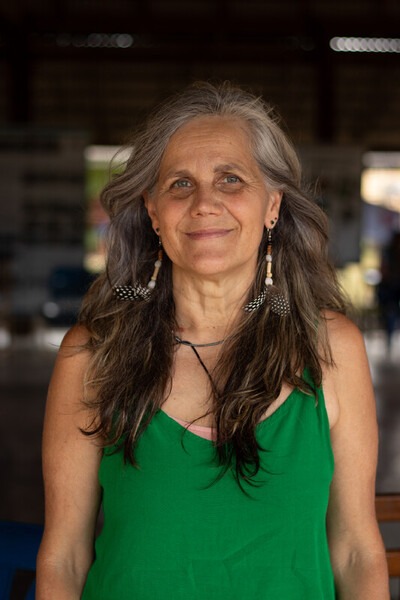
Rita de Cácia Oenning da Silva (producer, director, anthropologist) was born into a farming family in the interior of Santa Catarina. She studied at public schools, including university, where she graduated in anthropology. She developed and taught science, art and perception workshops for children and worked for a time as an actress. In 2004, she won the Wenner-Gren Anthropology Prize for developing a new method of using fiction for research with children. In 2022 she won another award from Wenner Green to produce a series of documentaries about the protagonism of indigenous women. She founded Produtora 2008 naming it Flor do Vento in 2016.
Kurt Shaw (writer, show-runner) attended graduate school at Harvard before moving to Latin America to organize the world’s largest network of grassroots organizations working with marginalized children.
Together, Rita and Kurt produced the first feature film written and directed by former child soldiers (Roleta da Vida, Colombia, 2007), a soap opera with indigenous teenagers for Bolivian national TV (En Busca de la Vida, 2011). His film A Princesa do Beco e o Lampião Cromado (Recife, 2017) won the award for best film of 2017 by the Subversive Cinema Society of Los Angeles and his documentary The other side of the other was shown on Brazilian public TV before going to the circuit of festivals. The film Wuitina Numia (Amazônia, 2021) was successful at children’s film festivals around the world . They have just completed the feature Aiurê.
Together they won the 2008 Freedom to Create Award for best human rights artwork, the 2016 United Nations Intercultural Innovation Award for their work on CanalCanoa, an indigenous Amazonian video channel, and the UNICEF Healthy Childhood Challenge (2022).
Rita da Silva and Kurt Shaw live in Florianópolis, in southern Brazil, with their 15-year-old daughter, Helena.
Ashley D. Morgan
Film: How to Groom Your Rabbit
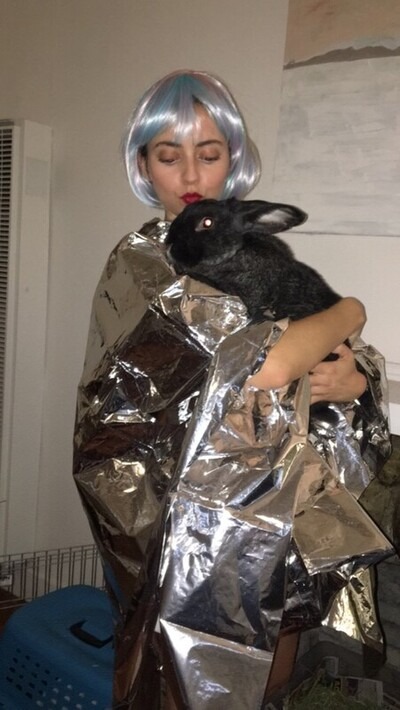
Ashley Morgan is a storyteller and artist fascinated with the concepts of truth and reality. Since studying media theory and art practice at UC Berkeley, she has explored the social implications and impacts of narratives in her work. She has directed commercial work for NYX Make Up and We Are Journeymen natural deodorant, and has produced Emmy nominated documentary series for Bravo, Netflix as well as work for Snapchat, PBS and ATTN:. Her work has been featured on Collider, Hypebeast, Pitchfork and Billboard. Daddy’s Playground – the short film she wrote, produced and starred in with co-creator Boni Mata, screened at the 2018 Hollyshorts and Mammoth Film Festivals and is now available on NoBudge. Ashley and Boni were selected for the first Short to Feature lab with Jim Cummings in 2018, and are now developing it into a feature.
Kalli Paakspuu
Film: Maestro Roman Toi Beautiful songs I dedicate to you
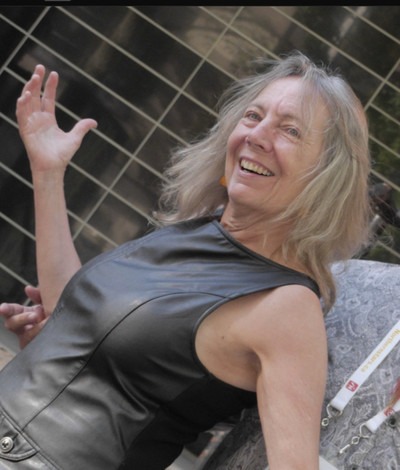
Born in Vancouver, after earning her degree in English from UBC and and a course in advanced filmmaking Kalli Paakspuu made her first dramatic short fim, “October Alms” in 1978 which was awarded a Bronze Award at the International Film Festival of New York. A filmmaker, writer, educator and new media artist Kalli Paakspuu was awarded a doctorate from the University of Toronto for her research on early indigenous use of photography in international relations. She produced and directed the documentary, “When East Meets East”, featured at Hot Docs, IDFA and other film festivals. A co-founder of Womenfilm/Womenart Inc, she is a co-creator with Daria Stermac of the Genie Award-winning, “I Need a Man Like You to Make My Dreams Come True”, featured at film festivals, Chicago International, Montreal New Media, Melbourne, BFI, Tokyo, Yorkton and Creteil. An alumna of the Canadian Film Centre’s Interactive Art and Entertainment programme, she created “World Without Water”, a new media interactive installation exhibited at CODE Live, Cultural Olympiad, Vancouver, 2010 and featured at the Lennox Contemporary Gallery in the Nuit Blanche Festival. Kalli has published widely on film and media and has taught in the animation and design programme at Sheridan College in Oakville, Canada. She was the programme director of EstDocs Film Festival and is a programmer of Female Eye Film Festival. Her biography music documentary, “Maestro Roman Toi Beautiful songs I dedicate to you” will be released in 2023.
Jane Centofante
Film: Saffron Robe
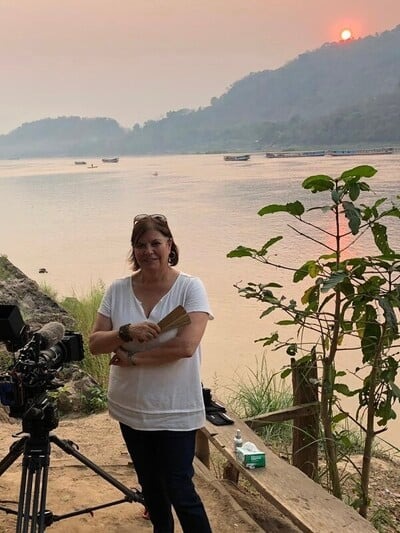
Jane Centofante began her career as an editor at various publications, including California magazine, before transitioning to work as a freelance editor and researcher specializing in non-fiction. Her projects have included books on current events and biographies, notably those of Dian Fossey and Bob Hope. In addition to her editorial work, she manages Boardwalk Press, a small independent publishing house focused on travel/gift books. A transformative trip to Laos inspired her shift from curious traveler to independent documentary filmmaker. Saffron Robe is her debut documentary. She resides in Los Angeles.
Sara Laura Schwartz
Film: Gert’s Boys

Sara L. Schwartz is faculty in the Suzanne Dworak-Peck School of Social Work at the University of Southern California. She approaches teaching and scholarship from a cross-disciplinary perspective bridging social work, anthropology, and visual arts. Sara founded the USC Visual Social Work Graduate Certificate to highlight counter-narrative storytelling using visual methods, including photovoice, ethnographic film, participatory video, visual archives, and textile arts. Her current scholarship examines the impact of historical trauma associated with AIDS, bleeding disorders, social exclusion, and forced displacement blending traditional qualitative interviewing with visual data. Sara serves on the Board of Directors of the National AIDS Memorial and co-founded the Surviving Voices Project, which annually produces short films on under-represented communities impacted by HIV/AIDS. She actively pursues opportunities to introduce a younger generation to the use of visuals in AIDS activism employed in the 1980s and 1990s, including theatre, film, imagery, and quilting.
Shiva Sanjari
Film: A Pot Full of Dreams
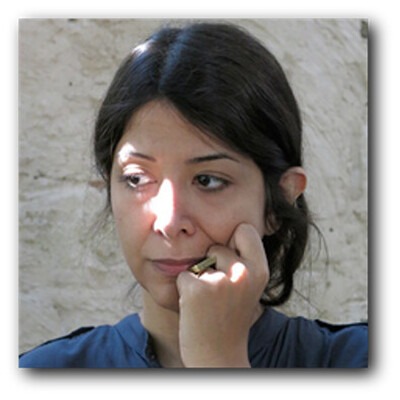
Shiva Sanjari
• Documentary Filmmaker
Education:
• 2006 B.A. in Visual Communication, Graphic design from Islamic Azad University, Tehran Central Branch and Faculty of Art & Architecture.
Scholarships/Residency:
• 2008 Artist in Residence in Cite International des Arts Paris, France: Scholarship granted by the Contemporary Art Museum of Tehran.
Memberships:
• 2017- Present: Member of SCAM, The civil society of multimedia authors in Europe.
• 2017- Present: Member of Tehran Documentary Film Directors Association
• 2024 : Member of DAE Documentary Association of Europe
Films:
• 2016: Here the Seats Are Vacant 60 min produced by Shiva Sanjari /Xerxes Ranina.
• 2017: Beauty Salon 26 min produced by Arte, Alegria Productions.
• 2020: Red Lipstick 42 min produced by Arte, Alegria Productions .
• 2024: In The Mirror,Ardalan Safaraz 52 min Produced by Ashkan Mossafaian.
• 2024: “A pot full of wishes” 83 min Produced by Rozbeh Javid.
Mikhail Alekseenkov
Film: Incredible India / Incredible Bharat EP.1 Majuli: Away from tourist route
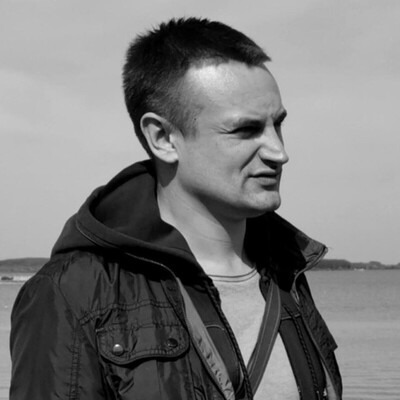
More than 15 years of work in cinema. Personal: 2 state awards and 5 award nominations. Participant in more than 60 projects, many of which have received international awards. More than 10 projects have been sold to Netflix. This is the first exclusive, individual and independent project!
Mikhail was born and raised in Russia, worked in the sound department for a long time. After the recent high-profile events related to Russia’s foreign policy, Mikhail’s life changed. It was difficult to calm the turmoil of the soul and he migrated to India in search of peace and consolation. There he began working as an individual film producer.
Gwendolen Cates
Film: THE DOCTRINE
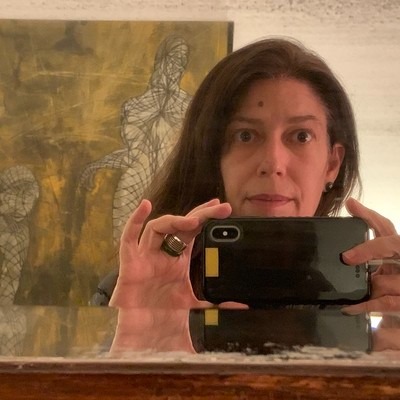
Director/Producer/Cinematographer Gwendolen Cates is an award-winning photographer, documentary filmmaker, and author. Her films have screened at prestigious film festivals all over the world, on PBS, at colleges and universities, museums, and the United Nations. Originally a photographer whose portraits of luminaries from Rosa Parks to George Clooney have been featured in national and international magazines, including PARADE, Rolling Stone, Vanity Fair, Life, and People, and her critically acclaimed book Indian Country (Grove Press 2001) inspired Oprah to begin a series on Native Americans. Her first multi-award-winning film, Water Flowing Together, a feature documentary about Navajo/Puerto Rican New York City Ballet dancer Jock Soto premiered nationally on PBS Independent Lens in 2008. The award-winning educational short film Guswenta: Renewing the Two Row Wampum (2014) is about the first treaty between indigenous people and European settlers on Turtle Island. Her most recent productions include multi-award-winning The Good Mind (2016) which follows Onondaga Nation leaders as they fight for environmental sovereignty of ancestral lands stolen by New York State in violation of a 1794 treaty with George Washington, and We Are Unarmed (2020) a fresh look at the peaceful resistance to the DAPL pipeline at Standing Rock. During the 2003 invasion of Iraq, Gwendolen was embedded with the U.S. military as a photographer for Time Inc. A feature documentary Mourning in the Garden of Eden about the Yazidis and other Iraqi Indigenous minorities is in post-production. A native New Yorker, and the daughter of a linguist who was fluent in Diné Bizaad (the Navajo language), Gwendolen studied cultural anthropology at the University of Chicago.
Ine Lamers
Film: The Radiant Screen
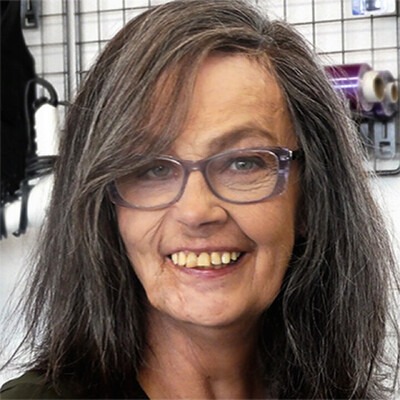
“ The strategy of Lamers is intended to break through the prevailing perception of the public (city) space as social space by literally transforming this space into a theatre, where scripted scenes/stories are then acted out. Lamers uses the theatrical in two ways: in the staging of what she scripts to happen at the location and in the orchestrated spatial manner in which she presents her work. Likewise you could read her deployment (or perhaps rather the playing off) of different media in one work or installation as a strategy of alienation-an alienation that establishes distance and blocks easy interpretations…”
– Frits Gierstberg- Independent curator, Head of exhibitions at Nederlands Fotomuseum.
Ine Lamers is a visual artist working in Rotterdam. Her practice is based in photography and has expanded over the years into video, drawing and mixed media installations. Lamers’ work has been exhibited widely including at Nederlands Fotomuseum (Rotterdam), Centraal Museum (Utrecht), SMs’, den Bosch Fries Museum (Leeuwarden, NL). Internationally she has shown at MMOMA (Moscow), Neuer Berliner Kunstverein (Berlin) and Akureyri Art Museum (Akureyri, IS). She has had solo exhibitions at Museum Boijmans van Beuningen (Rotterdam), Ron Mandos Galerie (Amsterdam), Motorenhalle (Dresden, DE), PERMM Museum of Modern Art (Perm, RU). Festivals in which her work has been shown include IFFR (International Film Festival Rotterdam), Vermont International Film Festival, (Burlington, USA), Kunstfilmbiennale (Cologne, DE) Viper (Basel, CH) and Rencontres Internationales (Paris, Berlin). Ine Lamers studied at AKI, Enschede and attended the Jan van Eyck academie in Maastricht from 1987-1989.
In 2019 she started the film project The Radiant Screen, as part of a long year artistic research on closed secret cities- former socialist model towns in Russia .
The Radiant Screen is also the title of a publication that is designed as an autonomous book, and at the same time as an illustrated script. The film and publication are completed 2024 / 2023.
sally bashford-squires
Film: Eitai – Community Togetherness
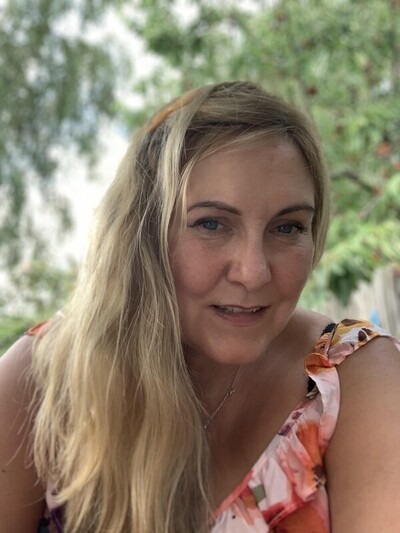
Sally holds a PhD in the Social Sciences from Nottingham Trent University. She is a lecturer in Global Public Health at The University of Greenwich, London as well as a director in Pear Works Productions alongside award winning BBC documentary maker Angela Robson. The company seeks to amplify marginalised voices in the pursuit of social justice.
Yelena Gluzman
Film: Invisible Machines
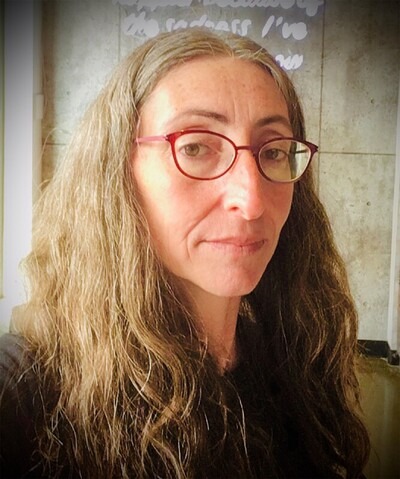
Yelena Gluzman is an interdisciplinary scholar and an experimental theater director and filmmaker. Her work draws on feminist STS, critical disability studies, ethnomethodology and distributed cognition. Her recent projects investigate how “other minds” are staged in laboratory experiments (Cognitive Neuroscience and the Experimental Theater of Other Minds, 2021), and trace the distributed communication ecologies of captioners who transcribe in real time for d/Deaf and Hard-of-hearing students (Stenoforms of Life, in progress). Her publications contribute to discussions on performance as research (PaR) and consider the promises of experimental reflexivity and ‘research as theater’ (RaT). She is a founding editor at Ugly Duckling Presse, an independent non-profit publisher of poetry, performance, translation and artist books, and founding editor of Emergency Index: An Annual Compendium of Performance Practice, currently in its tenth volume. She is Assistant Professor of Science, Technology, and Society Studies in the Department of Art and Design at the University of Alberta.
Dr. Mike Lang
Film: Like A Mountain: Mindfulness for Young Caregivers
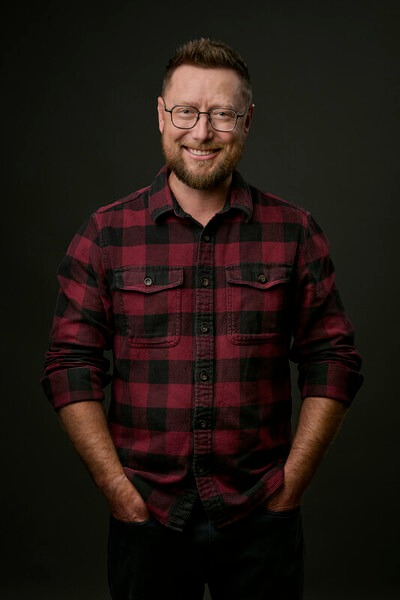
Dr. Mike Lang is a health researcher, award winning filmmaker, Digital Storytelling facilitator and Assistant Professor in the Faculty of Nursing at the University of Calgary, Canada. He has directed and produced three feature-length documentaries, two short documentaries, and three web series about the human health experience in addition to numerous health education curricula.
In addition to publishing academic research, Mike has facilitated the creation of over 1000 digital stories (short-films) with a diverse cross-section of patients, family caregivers, and health care professionals around the world. His professional and research focus is on using digital storytelling and documentary filmmaking in education, advocacy, research, and a therapeutic capacity within healthcare and wellness contexts. Connect with him on all socials @mikelangstories.
MJ Doherty
Film: Cosmic Coda
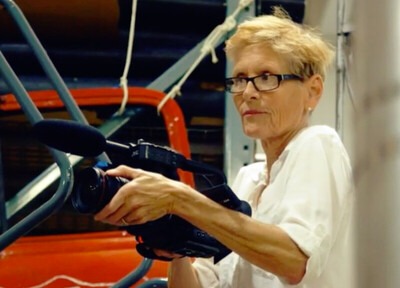
MJ was one of Ricky Leacock’s last grad students at MIT. Her features, all shot solo, include SECUNDARIA, PRIMARIA, and now, COSMIC CODA; have received national press, theatrical award screenings, retrospectives and International Festival appearances.
She’s published essays on sound and solo filmmaking; her prose/video combination, THE FISHING WIDOWS OF BAY ST LAWRENCE, was runner up for the Montana Prize in Nonfiction, then featured in PilgimMagazine Online. She is currently an Associate Professor Emerita from Boston University.
Tracy
Film: Our Threatened & Endangered Species: Allegheny Woodrats
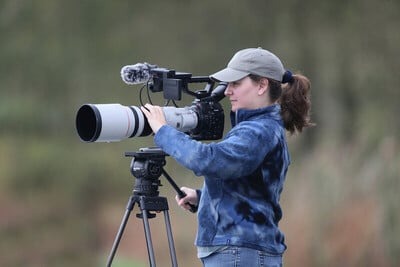
Tracy has produced over 70 films for the PA Game Commission since she came on board in 2010. She has won multiple professional awards and film festivals throughout the country. Some of these include “Pennsylvania Bald Eagles,” “Pennsylvania Ruffed Grouse,” and “Pennsylvania: A Keystone for Wildlife.”
Tracy owned Moonfire Film Productions (MFP) from 1999-2013. Here she was the recipient of several grants to complete films for various non-profit agencies. Her bird documentary won Honorable Mention for use of Natural Sound at the International Wildlife Film Festival, and has sold over 600 copies. Other projects include a promotional film on the Regional Science Consortium, and a film on invasive mussel species for PA Sea Grant. MFP also operated a large format theatre at the Tom Ridge Environmental Center at Presque Isle State Park.
Her wolf and coyote footage has appeared on National Geographic, and her Algonquin wolf footage is used in the Algonquin Provincial Park’s Nature Center.
In 2005, Tracy was the first woman to graduate from the Science and Natural History Filmmaking graduate program at Montana State University. Here she produced several student films including two on coyotes, one on Japanese wolves, one on the Thermobiology Institute, a promo for Montana EPSCoR, and many short format projects. “Spirit Dog,” “Chasing Coyotes,” and “Japan’s Lost Wolves” all won awards or were official selections at film festivals.
Helen Klodawsky
Film: Stolen Time

Independent filmmaker Helene Klodawsky is a passionate storyteller, committed to portraying complex political and social struggles. Exploring the documentary art form for over 35 years, Klodawsky’s work has been screened and broadcast around the world. The Academy of Canadian Cinema & Television, Hot Docs, the Rendez-vous du Cinéma Québécois, the Montreal International Documentary Festival (RIDM), World Press Photo, the Mannheim Film Festival, and the Jerusalem International Film Festival are among the many festivals and events that have honoured her work.
Robin Starbuck
Film: Báaxpee: This Ground
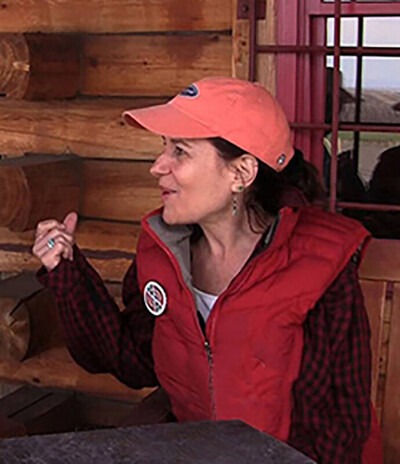
Robin Starbuck is an award-winning filmmaker and artist who produces experimental nonfiction films, installations, and animated media for theatre and opera. Starbuck employs a mixture of documentary and reflexive film styles in her work. By working in a nontraditional form she strives to create a cinematic space in which the world is perceived rather than known. In response to her work, viewers are invited to interact with what they see on the screen and to create meaning by reflecting on their own experiences, ideas, and truths. Starbuck has exhibited works at the Boston Center for the Arts, The Walker’s Point Art Center, Milan Biennale, Indie Open in New York City, Anthology Film Archives, Deluge Contemporary Art & Antimatter, Collected Voices Chicago, XVI Cine Pobre Cuba, the Madrid Film Festival, the Ethnografilm Festival in Paris, The Stockholm Experimental and Animation Film festival, and other festivals, art centers, and galleries globally. Most recently, her film, How We See Water, was nominated for four international documentary awards at the X Short Film Festival in Rome. Starbuck is currently an active member of the Women in Animation Association. She is a professor of film and animation at Sarah Lawrence College in NY.
Jenn Strom
Film: The Painted Life of E.J. Hughes

Jenn Strom is a Vancouver-based documentary filmmaker, editor and mixed-media animator who has been creating films for over two decades. As a director, Jenn’s mixed media shorts have screened at film festivals around the world and on TV across Canada. Her most recent short, A GOLDEN VOICE, made in collaboration with Haida filmmaker Patrick Shannon, told the origin story of iconic Haida artist Bill Reid. Her work is featured in the Gemini-nominated arts documentary 12 TAKES, and her hand-painted film, ASSEMBLY, produced by the NFB, was given the Kodak Images Award for Artistic Achievement by Women in Film Vancouver and screened at Hot Docs, VIFF and internationally. Her previous feature documentary editor credits include BACK HOME directed by Nisha Platzer (VIFF 2022), STUFFED directed by Erin Durham (SXSW & VIFF 2019), and Marie Clements’ musical documentary THE ROAD FORWARD (Hot Docs 2017) which won the Leo Award for Best Editing in a Feature Length Documentary.
Nelson Varas-Díaz
Film: The Darkness: Lessons on Solar Energy, Community, and Power.
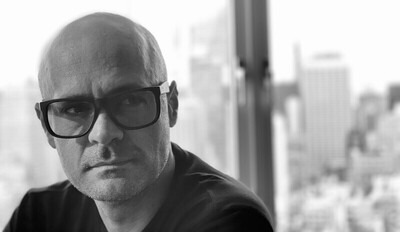
Dr. Nelson Varas-Díaz is a professor of social-community psychology at Florida International University’s Department of Global and Sociocultural Studies. He directed the award winning documentaries “Collapse,” “The Ear,” and “The Bee.” Together, his films have garnered more than 100 sets of laurels in international film festivals.
Weronika Plińska, Wojciech Jankowski
Film: Simulacrum
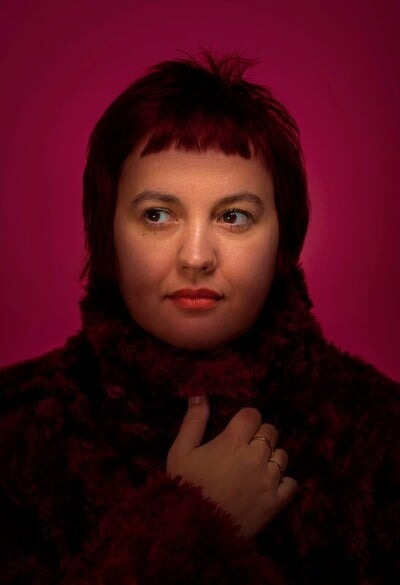
Weronika Plińska – cultural anthropologist, Assistant Professor at the Institute of Art and Design, University of the National Education Commission in Cracow, Poland. In addition to her book and numerous academic articles, she has authored two documentaries.
Wojciech Jankowski – cinematographer, film director, sound and image editor.
Sophie Jackson
Films: BROWN – An Archaeological Perspective in 4 Layers, Could Try Harder
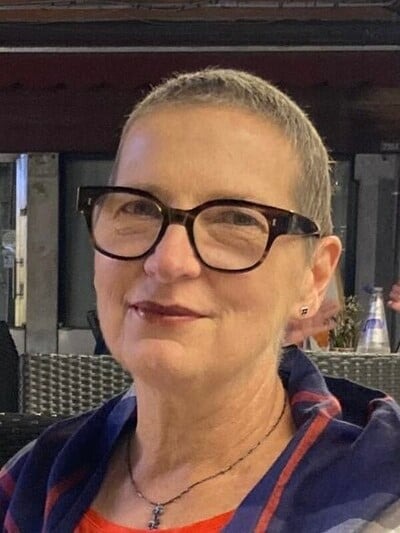
Sophie Jackson is a lecturer at Anglia Ruskin University and is currently the course leader of the Film and Television Production Course there. Prior to her transportation to the UK, Sophie was an independent producer working in the Australian industry, her films and television documentaries have received almost 20 festival and industry nominations and screenings internationally. These days her focus is on helping her students make brilliant films, in between times she is making interesting and smaller scale film work.
Director Biography – Dorna Van Rouveroy
Film: THE EMPIRE WRITES BACK
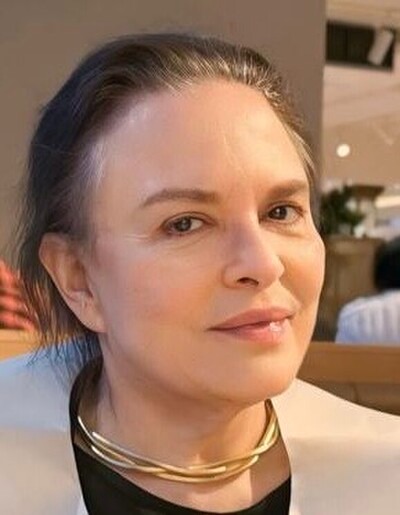
Dorna van Rouveroy van Nieuwaal, born in Jakarta, Indonesia. Filmmaker.
Her Canadian father Robert instilled in her a love for film, and after the Dutch Film and TV Academy, she did another postgraduate year at the American Film Institute in Los Angeles. She directed many documentaries, especially on colonial subjects, two feature films, authored and co-authored film scripts. Produced animated short films that won regular awards, including a special jury prize in Tribeca. She was a jury member of the Fantastic Film Festival (Netherlands), Festival Ashdod (Israel) and Festval Avanca (Portugal).
Donna Dees
Film: Snowdrops for the Bairns

Donna Dees was selected in 2021 by the editors of Glamour magazine as one of 100 women who have “re-shaped the world” over the last 30 years. More then an accolade, “WOTY celebrates women who place civic engagement squarely in front of their forward-facing talents and perceived fame. It brings together women who are actively doing work that is making a difference in the world.”
“Snowdrops for the Bairns” is her second impact film documenting successful public health campaigns led mostly by women.
Marjolaine Lamontagne
Film: Tipping Point: From Local Protection to the Global Governance of Biodiversity

Marjolaine Lamontagne is a Ph.D. Candidate in Political Science (International Relations) at McGill University (Montreal, Quebec, Canada). Her research focuses on the role of subnational and non-state actors in global environmental governance, and she has conducted over 700 hours of ethnographic fieldwork on the site of global events like UN biodiversity and climate conferences. Marjolaine is a Fonds de recherche du Québec – Société et cultures Scholar (2021), a Vanier Canada Scholar (2021-2024) and a Pierre Elliott Trudeau Foundation Scholar (2022-2025) . She holds a BA in International Relations and International Law and an MA in Political Science from l’Université du Québec à Montréal (UQAM).
Jenn Lindsay
Film: Simulating Religious Violence
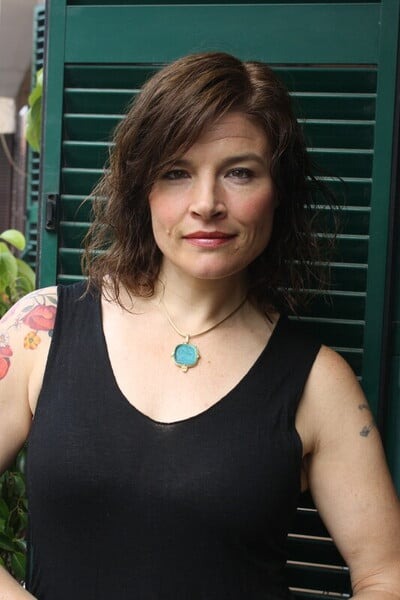
Jenn Lindsay is an award-winning documentary filmmaker, social scientist and Ted Talk speaker. Since 2005, she worked in post-production as a film editor, story assistant, and independent producer with MTV, the Sundance Channel, Atmosphere Pictures, and Swete Films. Her 2020 documentary short Quarantined Faith won multiple awards at film festivals. She has screened her ethnographic documentaries in festivals, conferences, and classrooms around the world, winning awards from the International Society for Religion and Science and the Society for Psychological Anthropology. Jenn earned her Ph.D. in the social science of religion at Boston University and is an adjunct professor of sociology and communications at John Cabot University in Rome.
Stephane Kaas
Film: Digital Dilemma
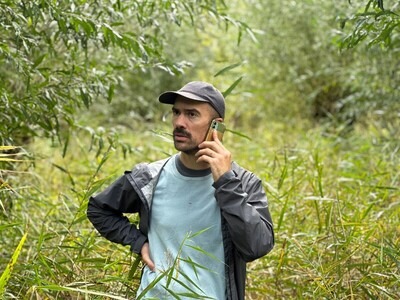
Stephane Kaas (Amsterdam, 1984) is a documentary filmmaker who combines documentary, animation, and fiction. His debut film about writer Etgar Keret won, among other awards, an International Emmy. In In Real Life I Have a Nose, he explores how webcomics use humor to address social issues. He has created TV series for VPRO and HUMAN and contributed to VPRO Tegenlicht episodes on animal languages, geo-engineering, and the relationship between finance and nature.
Sanne Rovers
Film: Interplay
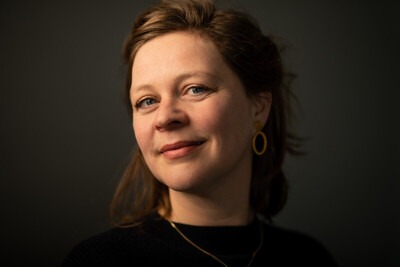
Sanne Rovers (1981) is a Dutch documentary/multimedia director and a member of the collective Docmakers. Sanne’s documentaries show the boundless drive of the people she films, with a cinematic approach and room for light-heartedness. Her themes are art, youth and nature. Her films have been screened at international festivals such as IDFA, Prix de Jeunesse and Prix Europe as well as local impact screenings. Homo Ludens (2018) won the audience award at the Go Short International Film Festival.
 Spotlight on Academics